What Customers Really Want From an Online Food Ordering Platform
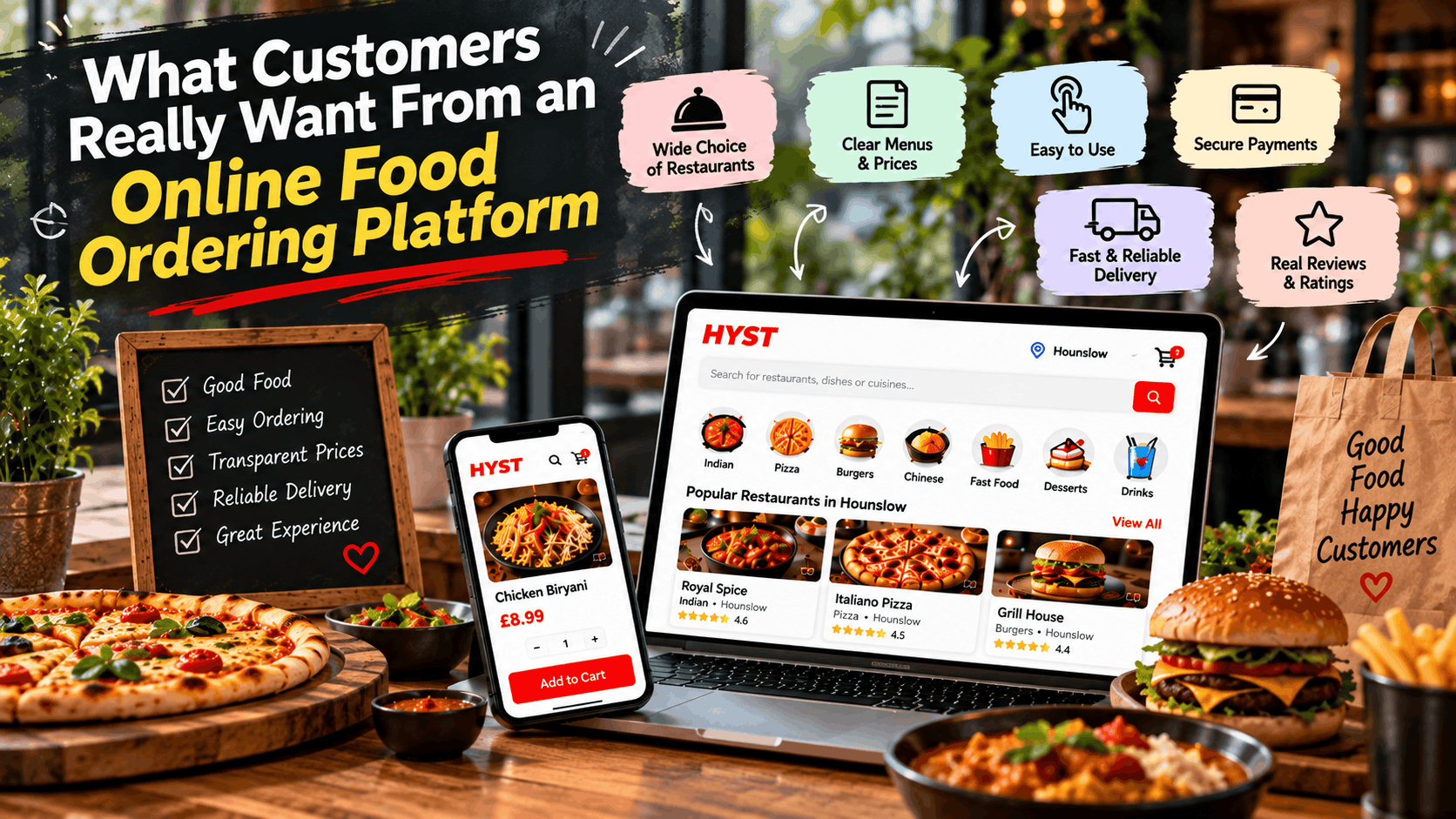
Customers choosing an online food ordering platform want more than a long list of restaurants. They want to discover suitable food, compare menus, understand prices and complete their orders without unnecessary complications. Platforms such as HYST provide a way to explore local restaurants and order food online, making convenience and clear information important parts of the digital restaurant experience.
For customers across the UK, online food ordering has become a practical way to find meals for lunch, dinner, family occasions and late-evening cravings. For restaurants, understanding what customers expect can help improve online menus, reduce ordering friction and create better digital experiences.
1. A Simple and Easy-to-Use Ordering Process
Convenience is one of the main reasons customers choose to order food online.
Customers should be able to find a restaurant, browse its menu, select dishes and complete checkout without navigating through confusing pages.
A straightforward ordering process typically includes:
- Restaurant discovery
- Clear menu categories
- Easy-to-read food descriptions
- Visible prices
- Customisation options
- A simple shopping basket
- Clear payment steps
- Delivery or collection information
- Order confirmation
Every unnecessary step can make ordering more frustrating. Restaurants and ordering platforms should regularly review the customer journey to identify areas where users may become confused.
2. Accurate Menus and Clear Food Descriptions
Customers want to know what they are ordering.
A dish description should explain the main ingredients and relevant options. Where appropriate, menus should also provide portion details, spice levels, dietary information and allergen information.
An inaccurate menu can create disappointment and additional work for restaurant staff.
For example, if a customer orders an unavailable dish or selects an option that is not actually offered, the restaurant may need to contact the customer to resolve the issue.
Platforms that support restaurant menu management can help participating businesses keep their digital information updated. HYST explains its menu and availability controls in its online ordering FAQs.
3. Transparent Restaurant Pricing
Online customers often compare multiple restaurants before deciding where to order.
They want to understand the price of each dish, any paid extras and the final amount before completing checkout.
Clear pricing can help customers make informed decisions and reduce unpleasant surprises.
Restaurants should pay attention to:
- Accurate food prices
- Add-on and variant prices
- Portion options
- Delivery charges, where applicable
- Other applicable fees
- The final order total
Customers searching for cheap restaurants near me, food delivery near me or takeaway near me still need accurate information rather than misleading price claims.
Restaurants can learn more about this topic through HYST's guide to clear menu pricing.
4. A Mobile-Friendly Experience
Many people discover restaurants through their smartphones. A food ordering platform should therefore be easy to use on a smaller screen.
Customers should not need to zoom repeatedly, struggle with tiny buttons or navigate a complicated checkout.
A mobile-friendly ordering experience should include readable text, clear food images, accessible menu categories and a straightforward basket.
For restaurants targeting searches such as online food ordering UK, order food online, Hounslow food delivery and restaurants near me, mobile usability is an important part of turning visitors into customers.
5. Food Photography That Matches the Menu
Food photography helps customers understand what a dish looks like before they order.
High-quality images can make a menu easier to browse, but accuracy is essential. Images should represent the actual food as closely as possible and should not create unrealistic expectations.
Restaurants should use consistent photography, readable descriptions and sensible menu categories.
A well-organised digital menu can help customers compare dishes and make decisions more confidently. Read HYST's article about digital menus and the restaurant ordering experience for further context.
6. Convenient Delivery and Collection Information
Customers want to know how they will receive their food.
Depending on the restaurant, this may involve delivery, collection or another available fulfilment option.
Useful information includes opening hours, delivery availability, estimated timing where available, collection instructions and any relevant restrictions.
Restaurants should avoid promising delivery times they cannot reliably meet.
Clear information can help customers choose the option that suits them and reduce unnecessary questions during busy periods.
7. Trustworthy Payments and Order Confirmation
Customers need confidence when paying online.
A good checkout should clearly display the order summary, total cost, payment method and relevant delivery or collection details.
After placing an order, customers should receive clear confirmation and any available updates about the order's progress.
HYST's public FAQs describe its payment arrangements, including payment processing through Worldpay and security measures. Customers and restaurants should consult the platform's current information for the precise terms and services available.
8. Access to Local and Independent Restaurants
Customers may use food ordering platforms to discover restaurants they have never visited before.
This creates opportunities for independent businesses that might otherwise rely heavily on foot traffic or word-of-mouth recommendations.
For example, a customer searching for Indian restaurants in Hounslow might discover a local takeaway through an online menu. Another person may search for pizza delivery in Hounslow and compare different restaurants before choosing one.
A useful platform should make restaurant information easy to explore, helping customers understand the cuisine, menu and available ordering options.
9. A Consistent Customer Experience
The customer experience does not end when payment is completed.
The food should match the menu, the order should be handled properly and the customer should receive clear information if a problem occurs.
Restaurants can build trust by maintaining consistent food quality, accurate online information and responsive customer support.
When a customer has a good experience, they may choose the same restaurant again.
This is why online ordering should be viewed as a complete customer journey rather than just a payment screen.
10. More Control for Restaurant Partners
Customer needs and restaurant operations are connected.
When a dish sells out, the restaurant needs a practical way to update availability. If prices change, the digital menu should reflect the correct information.
HYST describes menu, pricing and availability management for participating restaurants in its restaurant partner programme.
This type of functionality can help restaurants maintain accurate menus while responding to everyday operational changes.
11. Fair and Understandable Restaurant Economics
Customers mainly see the food, prices and ordering experience, but restaurant owners also need to consider the cost of fulfilling each order.
Costs may include ingredients, packaging, delivery, payment processing, staff time, marketing and platform charges.
HYST promotes a zero-commission model for participating restaurant partners. However, individual restaurants should review their specific commercial agreements and account for any other applicable expenses.
Its guide to zero-commission food ordering provides additional context about the model and the considerations for restaurants.
12. Privacy and Responsible Communication
Customers should be able to understand how their information is handled and how to contact the restaurant or platform if they have a concern.
Restaurants that collect customer information for their own marketing should follow applicable privacy and data-protection requirements. They should not assume that every ordering platform provides identical access to customer information or marketing tools.
Clear communication and responsible handling of personal information are important parts of building long-term trust.
Customers and restaurant partners can consult HYST's terms and conditions for the applicable platform terms.
13. What Makes a Good Food Ordering Platform?
The most useful platform is not necessarily the one with the most features. It is the one that helps customers complete their task efficiently while meeting restaurants' practical needs.
Customers generally want:
- Easy restaurant discovery
- Accurate menus
- Transparent prices
- Simple mobile ordering
- Convenient payment
- Clear delivery or collection details
- Reliable order information
- A trustworthy experience
Restaurants need a platform that fits their menu, operations, commercial requirements and customer base.
Conclusion
Customers want online food ordering to be convenient, transparent and reliable. They need accurate menus, clear pricing, mobile-friendly pages, secure payment processes and useful order information.
For independent restaurants in Hounslow and across the UK, meeting these expectations can help create a better digital customer experience. For platforms, the opportunity is to connect customers with local food businesses while keeping the ordering journey straightforward.
The best online food ordering experience combines useful technology with the basics of good hospitality: accurate information, quality food, dependable service and respect for the customer.